
Amalia Eriksson and the Story of Polkagris
Who was Amalia Eriksson? This article tells how the inventor of Polkagris shaped Gränna and why the town is still famous for its red and white candy canes.
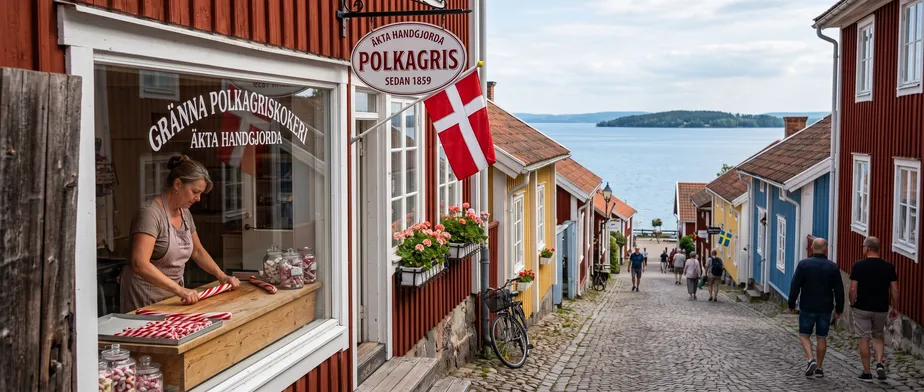
When people think of Gränna, they often picture the red and white candy canes that are called Polkagris in Sweden. This sweet treat is part of the town’s identity on the shores of Lake Vättern. Yet many people outside Sweden are hardly aware that a woman stands behind this famous specialty: Amalia Eriksson.
That is exactly why it is worth taking a closer look. Her story shows how closely a place, a craft and a single person can be connected. In Gränna, this heritage is still visible in many corners of the town.
The woman behind Polkagris
Amalia Eriksson is regarded as the inventor of Polkagris. Her idea created far more than a regional sweet. The red and white candy canes became the trademark of Gränna and made the town known far beyond Sweden.
Today many visitors mainly notice the smell of sugar, see the carefully displayed sweets and enjoy the special atmosphere of the small town. The person who founded this tradition can easily fade into the background. Yet without Amalia Eriksson, Polkagris would hardly have become the cultural symbol it is today.
Why Gränna is still linked to Polkagris
Gränna is a popular holiday destination in Småland. Its location on Lake Vättern, its charming streets and the wide views of the water make the town appealing in their own right. But Gränna became famous above all because of Polkagris.
The candy canes still shape the townscape. For many travelers, a visit to Gränna is therefore not only about the landscape, but also about this typical Swedish specialty. Tourism, regional identity and living tradition blend here in a very natural way.
Remembrance that stays visible in the town
In Gränna, Amalia Eriksson has not been forgotten. The town commemorates her achievements with a statue. It is not only a sight for visitors, but also a clear sign of how important her invention and her life’s work are for the town.
Such places of remembrance make history tangible. They show not only what Gränna is known for, but also who the town owes its reputation to. Especially today, when traditions are often seen only as a pretty backdrop, this form of recognition carries special weight.
More than just a sweet
Polkagris is more than a sugary treat. The candy canes stand for Swedish craft traditions, for regional culture and for the power of an idea that can shape an entire place. The close link between Gränna on Lake Vättern and this specialty shows how lasting the impact of culinary inventions can be.
Anyone visiting Småland will find in Gränna not only a pretty holiday town, but also a piece of everyday Swedish history. The story of Amalia Eriksson adds depth to the place and gives this well-known sweet a human face.
A look behind the famous red and white tradition
For holidaymakers in Småland, Gränna is worth a visit for many reasons. Its idyllic lakeside setting, its distinctive townscape and its close connection to Polkagris make the small town unique. Those who also explore the story of Amalia Eriksson see Gränna with a more aware eye.
In the end, people remember not only the taste of a Swedish specialty, but also the story of a woman whose invention lives on to this day. Amalia Eriksson left a clear mark on Gränna and is therefore an inseparable part of the story of Polkagris.
More articles
Ingvar Kamprad: The IKEA Founder from Småland
Who was Ingvar Kamprad? This article profiles the IKEA founder from Småland, explains where the name IKEA comes from and shows how strong local roots grew into a global brand.
Astrid Lindgren and Småland: Where Childhood Worlds Began
Astrid Lindgren is closely connected to Småland and shows how childhood, nature and a special way of life continue to shape her stories to this day.

Hiking in Småland: Discover Sweden’s Green Soul
If you really want to understand Sweden, at some point you have to leave the paved roads behind and simply start walking.
Nature reserves and birdwatching around Småland
Småland captivates with lakes, nature reserves, birdwatching and diverse wildlife in the heart of Sweden’s nature.
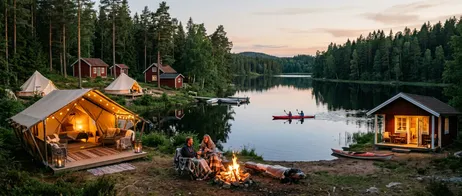
Experience Camping and Glamping Close to Nature in Småland
Småland delights with camping, glamping, lake landscapes and nature-based holidays full of calm moments and outdoor adventures.
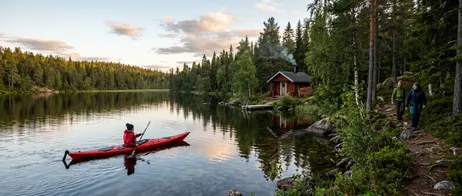
Experience Sweden: Enjoy Adventure and Relaxation
Sweden combines nature, lakes and a relaxed way of life and shows how adventure, calm and conscious relaxation can blend perfectly in one holiday.
